Blog

WAM Academy Update for October 2023 (Q3)

✨Highlights and Traction✨ Q3 was all about testing a cohort recruitment model and informing pilots. We are planning to teach what we’ve learned and recruit regular cohorts as we further develop WAM tech! Statesmen College Preparatory Academy’s mindfulness report has progressed, and we’re looking forward to echoing the work of this school. Our data vision is also communicated tightly in this engaging report. We’re actively looking for sponsors to support this and future research with school-based practitioners. Our message here is to shape the future of work with a stronger sense of self-discovery, emotional intelligence, and social awareness. For the benefit of all of us, this means better group projects, more thoughtful managers and leaders, and stronger retention at ambitious organizations. WAM tech suppliers have presented proposals to enhance our WAM tech offering. We can’t wait to tell you more about it this fall! Planning calls for WAM tech and program support abroad have begun for 21 countries. In phase 1, we hosted program discovery calls for directors in South Africa and Zimbabwe. WAM Impact Partners has been awarded a 2023 Tri-State Master Networks Community Council Award. Tri-State MN’s mission has always focused on the power of community. This year’s grant recipients represent a diverse group of non-profit organizations making a meaningful impact throughout the tri-state region of New York, Connecticut, and New Jersey. Exciting developments are on the horizon regarding our email addresses. Stay tuned for updates as we work to enhance our email system. These changes will help us streamline our communication and better serve our community. We look forward to sharing more details soon! Q3 learning from Summer Academy is to offer more to our audience and execute ongoing experiments with our partners. Rapid ideation coming soon in WAM labs!! Leave us a comment if you want to be in a WAM focus group. Team We are excited to report that everyone on our team took a break during August. This is a testament to building the workplace we imagine in the future of work. Shoutout to Curriculum Management Consultant, Nelly Lubin, for contributing to curriculum mapping on WAM research in our upcoming white paper release. Events💼 Founder shoutout for Christopher C. King for qualifying for the Istanbul Wisdom Council led by Patrick Mosher. Professor Mosher is a 30-year executive leader from Accenture Consulting and currently faculty at Purdue University, who convenes global impact leaders in rotating executive retreats to spiritually significant locations around the world annually. This fellowship curates lifelong membership with impact leaders who have made significant strides in executing big ideas across the world. This year, the program convened in Istanbul, Turkey, for a week of mindfulness and deeper connections with c-suite visionaries. You can keep up with the experience via tweets @_kingtalks and @wearemarcus1. Conversations with Black Leaders in Education conference, an enlightening event where Black voices from the forefront of education discussed its future and prevailing challenges. This experience served as a reminder of our commitment to meaningful dialogues and continuous learning in our pursuit of advancing education.   📈Financing Q3 was outreach and pitch mode. Now that we’ve received more feedback, we are actively looking for impact-driven investors. During our screening calls, the most promising feedback has been to nail our upcoming pilots. Execution is what will separate us from the pack and provide more proof points, as well as more testimonials to scale our impact metrics. Our Fractional CTO partners at ThinkNimble have joined us in reaching out to angel groups! If you are in community with angel groups that are aligned with our vision, please connect with us. We’re close to our goal of $500k submitted in grant applications, out of $2.6M available. We’re seeking more funding opportunities and technical writers to expand our capacity while we apply, apply, apply to relevant funding opportunities. If you know someone amazing to help, we’d love to be in relationship with them and have more resources to pursue applications. Shoutout to our local partners who’ve supported our work in Q3 at TD Bank and lending partners at FSC First. How you can help Relationships with funders currently investing in edtech startups and future of work. Also, social impact aligned founders who have experience with investors and small business grant applications. Connections: reach out to cking@wearemarcus.com to make warm introductions to venture capitalists that invest in Black/minority-founded companies, women-led businesses, or social enterprise startups. We would love to discuss our mission and company goals with aligned investors. Philanthropic partners and advisors who would like to support WAM Impact Partners (501c3), WAM Academy’s sister organization. We invest in character development tools and in community partners who have proximity to meaningful change. The co-conspirators that lead education reform nationwide and globally. Become a mentor speaker using Vocal Video, an online video-capturing platform! It only takes five minutes of your time but has a lasting impact. Click on one of these categories to start: Bullying and Cyberbullying College Readiness Careers Mental Health Friendship Success Check out our Black Excellence Sale clothing line and show your support for our work. Every purchase helps us continue to provide valuable resources to Black and Brown youth. Follow us on social media! Facebook, Twitter, Instagram, and Linkedin.

WAM Academy Update for July 2023 (Q2)

✨Highlights and Traction✨ Introducing WAM’s new website — a dynamic new site designed to provide a seamless user experience rich with valuable resources and engaging content. Summer Academy is live and designed to seat up to 1k learners for program delivery and data discovery. There is still time to have your school, organization, or student join to continue their character growth journey. Key hires update: interviewed and selected facilitators to assist in content delivery and data collection for summer participants. Engineering update: WAM Tech beta development completed. Core elements are designed to fit the next level of development via a learning management system (LMS) built for on-the-go access. Stay tuned for WAM’s upcoming appearance on ABC Good Morning Washington in July! Get ready to catch us in action as we share our inspiring story and mission. Don’t miss it! Partnerships Music Innovation Camp in Atlanta, in partnership with the Atlanta Black Tech Network, is submitting a joint proposal with WAM Academy for support from Amazon’s DEI initiative. CapTech Consulting has shared Summer Academy with the Charlotte Executive Leadership Council in addition to Charlotte school-based partners for sponsorship and referring participants. Henry Street Settlement is partnering with Summer Academy to share our program and product experience. HSS leads an engagement program for youth throughout New York City.Their mission is to open doors of opportunity for Lower East Side residents and other New Yorkers through social services, arts, and health care programs. They offer more than 50 programs to people of all ages. Learn 24 Newsletter, the leading out-of-school time provider for events and grants list, will be featuring Summer Academy in their communications to families in DC. Instructional Gym is partnering with us on our Statesmen Academy Measuring Love Report. Additionally, we are heads down creating the data story for mindfulness and our program domains with the help of our rockstar contributors and reviewers in the WAM ecosystem. FundEd Strategies has connected us to network partners and their growing impact community. Harlem Labs is a referral partner connecting WAM to school networks in TX. Instructional Builder, Shyanne Valentine contributed meaningfully and efficiently to WAM product development. Qubit Capital and Lawron Ballard, CPA formerly of KPMG are working with us to develop investor relationships and pursuing founder-investor matching. We’ve secured a vendor sponsorship with the Chancellor’s Office and My Brother’s Keeper Initiative within New York City Department of Education. More on this work and engagement site details coming soon! Events💼 BLK VC Summit was held on June 22 and was hosted at the University of Maryland, featuring Ade Omitowoju of Black Venture Capital Consortium, Drew Reid of the Rock Creek Group, Mikkey Clark of Arden Venture Partners, and Nasir Qadree of Zeal Capital Partners. Henry Street Settlement, Juneteenth Celebration full of sound, sun. Abrons Arts Center and Henry Street Settlement’s Department of Integration and Community Engagement invite you to a day-long outdoor celebration of our beloved Lower East Side community over Juneteenth weekend. Free performances, activities, and food! This program is free, and advance registration is encouraged. Admission is subject to our capacity at the time of your arrival. SEED Graduate Institute is hosting a one-day SEED Graduate Session on Wednesday, July 12th, at the Do Good Institute on the University of Maryland — College Park campus. Marketing ICYMI, the WAM WEBSITE is fresh!! Have you seen our new media page? Learn more about our perspective on CRT, not that one, here: About CRT. Not that one, the other one. — WAM Academy. Article highlight: Busting Myths About What Matters for High School and College Success | The To&Through Project (uchicago.edu) READ HERE→ 📈Financing Connections: reach out to Christopher King to make warm introductions to venture capitalists that invest in Black/minority-founded companies, women-led businesses, or social enterprise startups. We would love to discuss our mission and company goals with aligned investors. Philanthropic partners and advisors who would like to support WAM Impact Partners (501c3), WAM Academy’s sister organization, we are actively applying for grants, and we’d like your help. We invest in character development tools and in community partners who have proximity to meaningful change. The co-conspirators that lead education reform nationwide and globally. How you can help Relationships with funders currently investing in edtech startups and future of work. Also, social impact aligned founders who have experience with investors and small business grant applications. Talent connections! Introductions to program coordinator candidates, efficient grant writers in the education sector, and talented copywriters. See JD here for the program coordinator role on our careers page! More roles will be posted soon, and we are also accepting resumes for our job bank– connect with us! Hiring referrals We are also on the lookout for curriculum developers, data engineers, and solutions architects. Philanthropic partners and advisors who would like to support WAM Impact Partners (501c3), WAM Academy’s sister organization. We invest in character development tools and in community partners who have proximity to meaningful change. The co-conspirators that lead education reform nationwide and globally. Become a mentor speaker using Vocal Video, an online video-capturing platform! It only takes five minutes of your time but has a lasting impact. Click on one of these categories to start: Bullying and Cyberbullying College Readiness Careers Mental Health Friendship Success Check out our Black Excellence Sale clothing line and show your support for our work. Every purchase helps us continue to provide valuable resources to Black and Brown youth. Follow us on social media! Facebook, Twitter, Instagram, and Linkedin.

Embracing Culturally Responsive Teaching in the Classroom

In education, one approach stands out for its transformative impact on students’ lives – Culturally Responsive Teaching (CRT). This dynamic pedagogy acknowledges and embraces the diverse cultures, languages, and experiences of students, making the classroom a melting pot of knowledge and understanding. We strongly believe in fostering an inclusive and nurturing learning environment where every student feels valued, represented, and empowered. Here’s some info on the essence of Culturally Responsive Teaching and its potential to bridge gaps and create a harmonious educational journey. Understanding Culturally Responsive Teaching: Culturally Responsive Teaching goes beyond traditional instructional methods. It is a philosophy that embraces students’ cultural identities and backgrounds and seamlessly integrates them into the learning process. Our platform actively recognizes the rich tapestry of cultural backgrounds present in our learners, and we embrace the roles as facilitators of meaningful and relatable lessons. This creates a powerful connection between students and the content they engage with. An Intentional Effort for a More Inclusive Classroom: Implementing Culturally Responsive Teaching is not a simple task; it requires a high level of cultural competence and a genuine interest in learning about students’ backgrounds and experiences. However, the rewards are immense. CRT has the potential to close achievement gaps between students from different cultural backgrounds, addressing inequities within the classroom. Moreover, it strengthens the bond between teachers and students. To help educators create an inclusive and enriching learning space, we’ve compiled 4 practical strategies that seamlessly integrate Culturally Responsive Teaching into the classrooms: 1️⃣ Get to Know Your Students: At the beginning of the academic year, engage with students through questionnaires, surveys, and open discussions to understand their interests and learning styles. 2️⃣ Integrate Relevant Word Problems: Make subjects like math more relatable by using culturally-relevant word problems that resonate with students’ experiences. 3️⃣ Present Concepts Using Student Vocabulary: Grab students’ attention by employing their vocabulary to introduce new concepts before transitioning to academic language. 4️⃣ Bring in Guest Speakers: Invite diverse guest speakers to share their experiences, fostering an inclusive and engaging learning atmosphere. For the complete list of strategies and examples, feel free to explore this resource here. We encourage educators worldwide to embrace the power of Culturally Responsive Teaching and create classrooms where every student’s voice is heard, appreciated, and celebrated.

The Power of Diverse Mentorship in Education: A Path to Inclusion and Success

In a world where representation matters, the impact of diverse mentorship in education cannot be understated. An article from The Evening Sun sheds light on the experiences of Zaire Bond, a young student aspiring to become a teacher, who finds a lack of mentors who share his background and identity. At WAM Academy, we recognize the importance of representation and are committed to addressing this disparity by advocating for more Black male teachers. The Importance of Representation:  Research consistently shows that students thrive when taught by educators who share their racial and ethnic backgrounds. Unfortunately, nationwide data reveals a significant underrepresentation of Black male teachers in classrooms. This discrepancy not only affects student engagement and academic outcomes but also hinders the development of positive role models and mentorship opportunities for students like Zaire. Our Initiatives:  We are actively working to change the narrative by promoting diverse mentorship in education. We support pipeline programs, such as the Center for Research & Mentoring of Black Male Students & Teachers at Bowie State University, that provide opportunities for young Black students to explore teaching as a career path. By creating safe spaces, fostering research, and building supportive communities, these initiatives empower Black boys and men to pursue careers in education. The Ripple Effect:  The impact of diverse mentorship goes beyond individual students. When students have access to educators who they can relate to, they develop a healthy sense of self, make informed decisions, build connections, and achieve personal and academic success. Diverse mentorship also contributes to the overall well-being and success of communities, as students who are well-rounded and equipped with interpersonal skills become valuable contributors to society. Join the Movement:  We invite you to join us in creating a more inclusive and representative educational environment. If you are passionate about education and interested in becoming a virtual mentor speaker at WAM, we encourage you to apply. By supporting diverse mentorship, we can empower students, uplift communities, and build a brighter future for all. To learn more about the importance of diverse mentorship and its impact on students like Zaire Bond, read the full article here.

Social-Emotional Learning (SEL) Redefined: Embracing Culture for Student Success

At WAM, we’re passionate about creating inclusive and empowering educational environments that truly resonate with students. The 2020 article highlighting Black students’ experiences in schools really hit home with our mission to tackle the persisting racial inequities and injustices in education. Social-Emotional Learning (SEL) should be deeply rooted in cultural relevance to effectively support the development and well-being of diverse youth. We understand that students, especially those from Black communities, often face unfair biases, disciplinary discrepancies, and limited access to advanced programs. These injustices can lead to racial trauma and impede students’ academic and social-emotional growth. That’s why we’re strong advocates for the power of Culturally Responsive Teaching (CRT) and Social-Emotional Learning (SEL), which acknowledge the impact of culture-blindness and confronts racial biases head-on. But it’s not just talk for us; we’re committed to action. Our platform embraces culturally responsive practices, the latest methodologies, and a whole lot of support. Our goal is to ensure every student feels seen, heard, and valued for who they are. By centering cultural traditions, providing online mentoring, and fostering a nurturing community, we strive to create safe and empowering spaces where students can thrive in and out of school. Join us in the fight for educational equity and cultural empowerment. Dive into the full article here to gain further insight into the challenges students of color face and the pressing need for culturally relevant SEL. To learn more about our initiatives and how you can contribute to this transformative movement, look through our website or reach out to us. 

WAM Academy Update for March 2023 (Q1)

✨Highlights and Traction✨ We’re hiring facilitators for a summer cohort experience with expertise in Self-Awareness and Self-Management, Decision Making, Relationship Skills, and Social Awareness. Are you a talented communicator and educator with some free time this summer? Our hiring committee is eager to get to know you as soon as you apply and onboard you into WAM Summer Academy by June. Feel free to share the application with WAM friends located here: Facilitator Application. Our aim is to run three courses over the summer. Be on the lookout for participant applications. In our next shout, if you’d like to recommend a cohort of learners between ages 12–24, schedule a call with us here to discuss. We’ve secured a vendor sponsorship with the Chancellor’s Office and My Brother’s Keeper Initiative within New York City Department of Education. More on this work and engagement site details coming soon! WAM Consulting is doing deep-dive research with Statesmen Boys College Preparatory on their mindfulness work with middle and elementary boys in southeast Washington, DC. What does this mean? We’re studying the measurement of character development approaches aligned with our core domains 1) social-emotional learning, 2) restorative justice, and 3) culturally responsive teaching. Our aim is to publish a report entitled, Measuring Love: An Impact Report to elevate the stories of practitioners, measure the progress of loving on our community in a school setting, and document the story of Statesmen’s leadership and educators. This work is currently co-sponsored by WAM and the National Association for Black Male Educators. We’d love for you to join us in funding this important work for next year and beyond. Please reach out to operations@wearemarcus.com to express interest in a school partner with an aligned vision. Team highlight time! We honor Marie Prentice for a year as WAM’s COO. As a longtime WAM friend, Marie has found success managing complex logistics and strategies in the political sector and for a number of national initiatives, including Obama’s 2008 and 2012 campaigns and the initial presidential legacy leadership team, the Affordable Care Act, and projects with public, private, and charter schools. She has amassed an impressive track record that includes fundraising and managing budgets of over $100 million. To discuss supporting our work and aligning with WAM this year, reach out directly to operations@wearemarcus.com. Partnerships We’re excited to announce that we’ll be running our inaugural WAM Summer Academy. Our cohort experience for summer will be bolstered by mentor stories in partner chapters throughout our rich network. We’re launching a mentor speaker partnership with Blacks in Technology (BiT). A 70+ chapter membership organization with global reach of black and brown technologists. Eduk8 Worldwide has been an entrepreneurship programming partner since the early days of WAM in 2017. This year we plan to deliver WAM Academy tools with Hustle Lab in Jamaica and the Bahamas. We are also working with a local out-of-school time mentoring organization in London this June. Events💼 Check out our livestream conversations this quarter. Featuring rockstar educators and thought leaders in character development. On April 26th, we’ll be sitting down with Erin O’Leary, Education Strategy Consultant, and on the 25th we’ll be talking with Teresa Lasley, teacher at Ron Brown College Preparatory High School DC. Don’t forget to also mark your calendars for our Generation DMV panel! On April 22nd, from 2–5 pm EST, we’ll explore the topic of Black men’s mental health from different generational perspectives. This is a great opportunity to learn more about this important topic and engage in meaningful conversations with others. Get your tickets here! Marketing Article alert! We published an article discussing the impact of Black Men’s Brunch on our community partners at 500 Men Making a Difference: ICYMI: Black Men’s Brunch 22–23. Guest speakers included Mayor Eric Adams of New York City, Pastor A.R Bernard, and billionaire real estate mogul R. Donahue Peebles. READ HERE→ 📈Financing Last year, through this year we raised $1.1M in philanthropic support from Impact Assets Donor Advised Fund, and we are looking to increase awareness about our values and desired program outcomes from WAM Summer Academy with other supporters. We’re also building now for WAM Winter 2023. Outcomes include further learner engagement insights and core competency evaluations based on the leading frameworks in our SEL (Social-Emotional Learning). Connections: reach out to cking@wearemarcus.com to make warm introductions to venture capitalists that invest in Black/minority-founded companies, women-led businesses, or social enterprise startups. We would love to discuss our mission and company goals with aligned investors. How You Can Help Introductions to PR strategists and firms that have clear and current relationships with in-school and out-of-school time organizations. Relationships with investors in ed-tech, willing to make warm introductions to startups focused on supplemental curriculum. Hiring referrals: we are also on the lookout for curriculum developers, data engineers, and solutions architects. Philanthropic partners and advisors who would like to support WAM Impact Partners (501c3), WAM Academy’s sister organization. We invest in character development tools and in community partners who have proximity to meaningful change. The co-conspirators that lead education reform nationwide and globally. Become a mentor speaker using Vocal Video, an online video capturing platform! It only takes five minutes of your time but has a lasting impact. Click on one of these categories to start: Bullying and Cyberbullying College Readiness Careers Mental Health Friendship Success Check out our Black Excellence Sale clothing line and show your support for our work. Every purchase helps us continue to provide valuable resources to Black and Brown youth. Follow us on social media! Facebook, Twitter, Instagram, and Linkedin.

Impactful Mentoring with Restorative Justice

Restorative Justice (RJ) We have intentionally infused RJ practices into our framework. WAM empowers educators (using RJ, SEL, and CRT) to have a deeper understanding of the diversity in the Black and Brown student experience, resulting in stronger connections with students and improved educational outcomes. RJ Objectives Educators will be able to effectively implement “RJ circles” or “RJ corner/spaces” in their classrooms. RJ circles can be used to achieve a variety of goals, including building relationships, resolving conflicts, and enhancing instruction. Below are possible objectives for students. Students will develop an understanding of the principles and vocabulary of restorative justice. Students will learn how to use restorative questions to support conflict resolution and other types of communication. Students will be able to define restorative justice and what justice means to them. Students will be able to model empathic listening through role-playing. However, when you partner with WAM, we will work with you to develop goals that are tailored to the needs of your school or program. Interested? Click below to enroll in WAM Academy ENROLL NOW→ Follow us on social media! Facebook, Twitter, Instagram, and Linkedin.

Resolving Conflict with Restorative Justice

Restorative Justice (RJ) is an alternative way of dealing with conflicts, harm, or rule violations in K–12 classrooms. It involves bringing the parties together to talk, listen, and find ways to repair the harm and restore relationships. LEARN MORE→ Why is RJ important? We know that Black students are suspended at higher rates than white students. Part of the reason is conscious and unconscious teacher biases and a lack of cultural awareness. With WAM’s mentoring platform, we seek to improve learning AND life outcomes for youth. Students need the space to work out conflicts in a healthy manner, in environments they feel safe in. They deserve to feel heard, and that educators “have their back.” RJ does exactly that by teaching students how to take responsibility for their actions, develop empathy for others, prevent future conflicts, and work together to create a positive community. RJ best practices vary. WAM prioritizes the following guiding principles: Relationship building. Striving to be respectful to all. Providing an opportunity for equitable dialogue and participatory decision-making. Involving all relevant stakeholders. Addressing harms, needs, obligations, and causes of conflict and harm. Encouraging all to take responsibility. Want To Learn More About RJ? Next, we’ll explain how WAM builds upon existing RJ practices that support students without harsh disciplinary measures. Check out our website to learn more about WAM. ENROLL NOW→ Follow us on social media! Facebook, Twitter, Instagram, and Linkedin.

Culture Informed Learning With CRT

Joining of CRT and WAM CRT (Culturally Responsive Teaching) and WAM are inextricably linked. We use the ideals of CRT (check out last week’s post for a reminder!) and align them with our values and framework, creating actionable CRT goals. WAM Academy Values Principles we hold dear Diversity of the Black experience. Vulnerability with students and educators; focused on students’ voices. Safety for Black youth. Storytelling to create synergies within the school community. WAM Framework What our work is built upon Vulnerability: uncertainty, risk, and emotional exposure. In action: vulnerability is modeled by mentor speakers. Relatability: something that is understandable because it is similar to something you have known, experienced, etc. In action: relatability is shared through our lived experiences and the unique stories of our mentors. Cultural identity: identifying with or feeling like you belong to a certain group based on nationality, ethnicity, race, gender, or religion, among other cultural categories. In action: cultural identity is emphasized for students to feel like they belong and grow into their own unique, real selves. Examples of actionable goals CRT informed goals Students will be able to explain the meaning of culture. Students will analyze and discuss important terms relating to culture, such as values, morals, beliefs, behavior, customs, stereotypes, and generalizations (among many that could come up), in class conversation and also in their writing. Students will be able to describe the health benefits of positive self-esteem, balance, flexibility, resilience, and healthy relationships with others. Up Next Keep an eye out for our next post, which will discuss Restorative Justice and what it means to students. ENROLL NOW→ Follow us on social media! Facebook, Twitter, Instagram, and Linkedin.

About CRT. Not that one, the other one.

We present to you: CRT. No, not Critical Race Theory. Culturally Responsive Teaching. Defining CRT CRT integrates students’ personal experiences, cultural norms, and values into effective classroom instruction. It encourages learning via a cultural lens and fosters a sense of belonging in educational environments. An example of CRT in the classroom: a history lesson about a world conflict that uses pop culture references to help students relate to and better understand the situation. The students are sure to feel seen while also retaining the information. Students learn and digest more when there’s an element of fun. And we can definitely relate! Think back to your school days, we bet you still remember the fun teacher AND what they taught. Geneva Gay, Professor of Education (multicultural education and general curriculum) at the University of Washington, stated that CRT is “validating, comprehensive, multidimensional, empowering, transformative, and emancipatory” — all characteristics that we value and incorporate into our WAM platform. LEARN MORE→ The 🔑 to Success The key to CRT is developing healthy learning environments. Settings that include: A fundamental belief in the ability of all students to learn. A wide range of curricular content. Dynamic instruction. Community involvement. Want More Info? If you’re interested in creating safe spaces for students to learn where they feel a sense of belonging, stay tuned for our next post: WAM + CRT. ENROLL NOW→ Follow us on social media! Facebook, Twitter, Instagram, and Linkedin.

You, WAM, and SEL.

A little bit ago, we filled you in on all things SEL (social-emotional learning), but you may still have questions. For example, how does WAM make use of it? And how can it help your community? Don’t worry; we’ve got you. The answers to all your questions are just a few sentences away. LEARN MORE→ A focus on equality and inclusion is a vital part of SEL; however, WAM takes it a step further by purposefully supporting students of color. We incorporate SEL into our mentor platform and center Black and Brown experiences and voices. Because, let’s face it, places that operate with us in mind are few and far between. We know that how we teach and relate to students of color sometimes looks different, and there’s a need for relevant perspectives and tools to reach them in meaningful ways. WAM is an innovative platform that meets that need. A focus on equality and inclusion is a vital part of SEL; however, WAM takes it a step further by purposefully supporting students of color. We incorporate SEL into our mentor platform and center Black and Brown experiences and voices. Because, let’s face it, places that operate with us in mind are few and far between. We know that how we teach and relate to students of color sometimes looks different, and there’s a need for relevant perspectives and tools to reach them in meaningful ways. WAM is an innovative platform that meets that need. Using the SEL Framework and Our Two Other Domains The WAM platform reduced suspension rates by 20%, truancy by 40%, and substance abuse by 60%. How SEL + WAM Can Help Your Community WAM is designed to work with educational institutions, building on existing programming. We provide tools that align with your vision by listening to your specific needs and goals. By becoming a thought partner with WAM, you will be part of a comprehensive process that determines where you currently are, hones in on your priorities, and gives a plan of action. Implementing SEL into your schools and districts, you will: Improve knowledge, skills, and attitudes in five social and emotional competence areas. Reduce teacher biases. Establish equitable learning environments that support students’ social, emotional, and long-term academic development. You’re the experts; you know what’s best. We want to support the work you’re already doing to develop skills and create learning environments that take a whole-student approach to development. Together, we can positively shift outcomes for Black and Brown students. ENROLL NOW→ Want More Info About Our Other Two Domains? You’re in luck. The basics of CRT (culturally responsive teaching) is our next topic. While you wait for the next super informative post, explore our website to learn more. Follow us on social media! Facebook, Twitter, Instagram, and Linkedin.

What is SEL?

Introducing SEL (social-emotional learning), one of three domains WAM Academy (WAM) uses in our mentoring platform. It equips Black and Brown students with the tools they need to succeed both in and out of the classroom. We are revolutionizing mentorship, in part, by incorporating the latest SEL data into our approach. We know what you’re probably thinking: “Sounds great, but get on with the explanation.” So without further ado, below is an SEL overview. SEL 101 SEL is a component of the Collaborative for Academic, Social, and Emotional Learning (CASEL) program, which helps to cultivate skills and environments that advance students’ learning and development. SEL is a pretty big deal. It addresses the five core competencies and enables schools and communities to equip students with the interpersonal skills needed to develop a healthy sense of self, make decisions, build connections, and achieve personal and academic success. It works with the community in mind, using a “teach the teacher” method that allows them to create safe, welcoming places for students to learn. This produces well-rounded students who add value to their communities according to their strengths, needs, and cultures — and it’s backed by research! Hundreds of independent studies, to be exact, but who’s counting? Spoiler alert: we are. ENROLL NOW→ SEL Piqued Your Interest? We hope so! We’ll post again shortly to explain exactly how WAM integrates SEL into our platform. In the meantime, visit our website to learn more. Follow us on social media! Facebook, Twitter, Instagram, and Linkedin.

Edtech for Black Boys Can Scale

From a statistical point of view, in North America boys of color are highly unlikely to join kindergarten having the basic language and literally skills they would need to succeed. Things work out even more to their disadvantage as they grow up, leading to only about 59% of them graduating from high schools. Compare that to the numbers of at least 80% of white males graduating from high schools. Mentorship Programs for Boys of Color United States President Barack Obama launched the My Brother’s Keeper (MBK) program in 2014, to help America’s boys of color reach their full potential. MBK is meant to address the challenges that are unique to the boys of color and that are keeping them from achieving their full potential.As President Obama explains, MBK achieves this “By focusing on the critical challenges, risk factors, and opportunities for boys and young men of color at key life stages, we can improve their long-term outcomes and ability to contribute to the Nation’s competitiveness, economic mobility, and growth, and civil society.”The MBK program works with mentors already familiar with the school system. They include teachers, coaches, administrative staff, faith-based leaders, AmeriCorp volunteers, security guards, after-school tutors and college students.From the results, it is clear there is tremendous progress being done.However, there are still more boys of color out there to whom the MBK and other similar programs cannot reach out to and mentor them. That leads to a mentoring gap. Sadly it has also been observed (publication by United Way) that recruiting black men to act as mentors is another challenge on its own. Technology picks up where conventional Mentorship programs drop the ball The mentorship gap that results out of the inability of traditional mentorship programs already established to reach out to all boys of color can be addressed using technology. That is where the idea of We Are Marcuswas born.We Are Marcus is an online platform founded by Christopher King to sort of match-make mentors with boys of color. Within the platform, mentors can interact with boys of color and offer them some life coaching and mentor them into becoming responsible law abiding young men.As Christopher, Founder and CEO of We Are Marcus, explains to Black Enterprize; “We built We Are Marcus to address rapid dropout rates and underachievement of young black men in schools throughout the country. Mentor organizations are currently limited by time and capacity. Our dynamic vision leverages technology in a way that mentoring organization have not tapped into.We’ve found that students feel more comfortable, more quickly, and more open to reflecting on their own lives without judgment in this format. Anyone who has worked in a classroom will agree. Technology is the way we keep our kids engaged.” About We Are Marcus It is an online platform for on-demand character development for boys of color to whom the conventional mentorship program have either not yet or have been unable to reach out to. The platform seeks to bridge that mentorship gap between this group of boys and those already reached by mentorship programs like MBK mentioned above.Although the platform is still in prototype and product development stage, it promises greater outreach for mentorship program by leveraging on the internet and technology. Not to mention, people feel at ease interacting virtually and are more inclined to be open, than when interacting physically. It also eliminates barriers such as schedule conflict and matching mentor and mentee limitations.For more information head on to the We Are Marcus website.(Visited 486 times, 1 visits today)

1776 Campfire Podcast

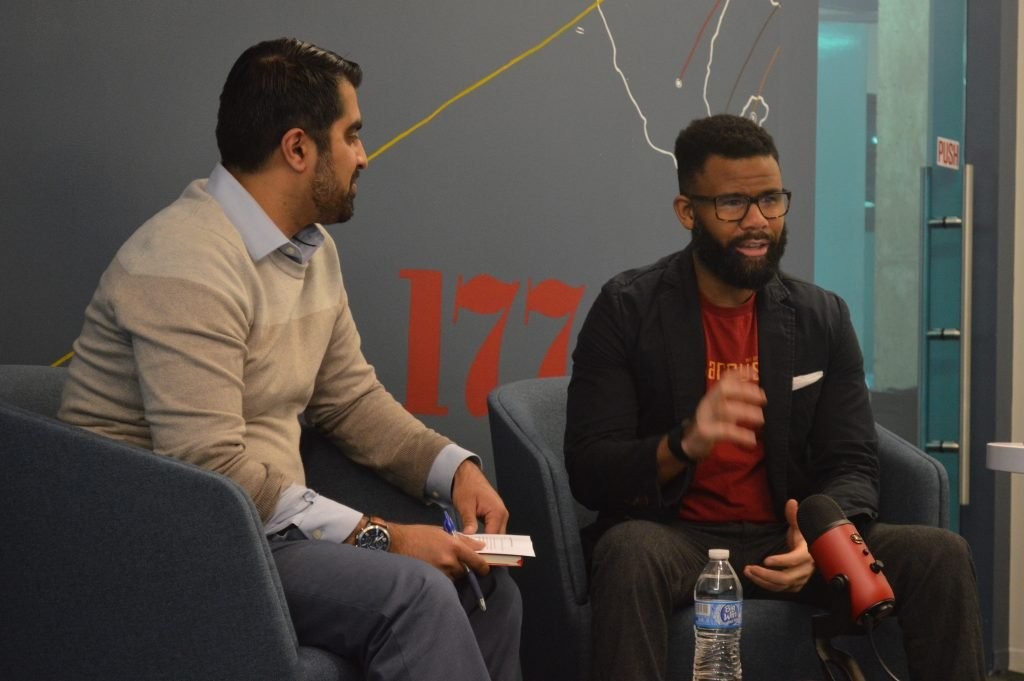
Overview: We Are Marcus is a character development platform designed to bring mentorship to Black youth and to create mentoring opportunities for Black men across the country. Christopher King, the founder and CEO of We Are Marcus, has been featured in Black Enterprise and On the Ryse as a leader in social innovation.  He was also recognized by the D.C. Firm Village Capital for Social Impact, and his team recently received an award from the National Institute of Health in recognition of their success as a startup company. The platform is a resource that should be urgently considered by school districts because of its incorporation of data and data analytics to track student growth and because of the deeply rooted inequalities within the education system, which are reflected by both the lack of diversity and the wide achievement gaps. On Wednesday, Fifth Tribe welcomed Christopher King to the 1776 Startup Co-Working Space for the live recording of the fourth episode of the Campfire: Innovation and Impact Podcast.  For the second time, the podcast was streamed on Youtube, was recorded in front of an in-person audience, and featured a live question and answer segment.Christopher King is the founder and CEO of We Are Marcus, a character development platform that is designed to bring stories of successful Black men to middle school and high school youth around the country.  He and Khuram met at the first 1776 accelerator in D.C.; We Are Marcus was selected out of 150 applicants to take one of ten places in this incubator’s first cohort. The two entrepreneurs share their passion to make an impact, and their hour of conversation jumped from how We Are Marcus bloomed from the intersection of mentorship and technology, to topics related to diversity in tech, and to the role of mentorship in personal and professional development.  In a realm that is often considered to be “progressive” and driven towards change, tech companies seem to be struggling with diversity as much as other players; so, in the words of Khuram, “We Are Marcus is coming at the right time.” Christopher King, CEO of We are Marcus, answers a question from Khuram Zaman, CEO of Fifth Tribe, during the fourth episode of the Campfire: Innovation and Impact Podcast. What Makes We Are Marcus a Mentorship Game Changer Although he’s not what one would consider “tech savvy,” Christopher was able to break into the innovation space and bring his vision of We Are Marcus to life because of the “gall and bravery” that drove him; he says that this opportunity is one that he created for himself – one that he did not wait around for -, and that this dedication and focus pushed him to put his ideas down on paper, to make them functional, and to then seek the technology from collaborators.  His idea of a mentorship platform sparked in 2015, and the We Are Marcus corporation was launched not long thereafter in 2016.According to the founder, there are two factors that make We Are Marcus a unique and innovative platform that is doing what has not yet been done.  Firstly, We Are Marcus brings a cultural sensitivity to mentorship that is lacking in other mentorship experiences. During his discussion with Khuram, Christopher frequently returned to a personal example of an interaction that he had with a school counselor in high school.  He was told with directness and without sensitivity – as if the dialogue was neither personalized nor uncommon – that he would never attend a four year university. Looking back with a college degree, two Master’s degrees, and an impressive resume of entrepreneurship, leadership, and social impact projects, Christopher understands that this experience is shared by kids of color everywhere: instead of being uplifted by the school system, they are being defeated and traumatized.  Christopher’s motivation is to bring stories that are shared, yet untold, to those who are experiencing what those who came before them did – to show them that, yes, you can overcome. You are strong, talented, and you can (and will!) succeed.We Are Marcus confronts the challenge that typically plagues other mentorship organizations: the mentorship experience cannot be measured.  With its incorporation of calculated and evaluated data, AI, and machine learning, the interface can measure how students grow over time after being impacted by the stories shared by their digital mentors.  These social and emotional learning frameworks have, for too long, “been locked inside the ivory towers,” Christopher said. But by leveraging data and technology, We Are Marcus is trumping barriers around accessibility, imagination, and social impact.  The platform multiplies the ripple of mentorship, and the goal is to cut the mentorship gap (there are currently 16 million missing mentors in this country) in half by 2025. The Power of the Platform To Khuram, the concept of a platform was a fascinating one to discuss.  He was curious about how his fellow CEO arrived at the idea, and Christopher reflected that his intention was to “bottle up the conversations that [had] been privy with [his] mentor” in order to share them with others.  However, he brushed off the prospect of an app: “I didn’t want to be in the app business… everyone has an app.” The logical solution was a platform interface that was accessible via laptop and desktop (though it is mobile friendly).  Christopher started with a $2,000 budget and a contracted developer, and the project evolved from the idea that mentor videos and resources could be downloaded onto a desktop so that the user will always see it. Since this original design concept, the We Are Marcus system has continued to be optimized, a constant process that is facilitated by frequent design iterations and rounds of feedback.  In terms of functionality, the interface is accessible via a personalized log in.  The discussion leader – a teacher, for example – is provided with a facilitator guide, and the students log on to the site to view a gallery of videos ranging from 60 seconds to 2 minutes; these are organized

For media or press inquiries contact marketing@